Arnaud Marguin — Osteopath D.O.
Graduate of the Geneva School of Osteopathy (2006)
Registered with the General Osteopathic Council (GOsC) — no. 8938
Member of the Registre des Ostéopathes de France (ROF)
Torticollis treatment
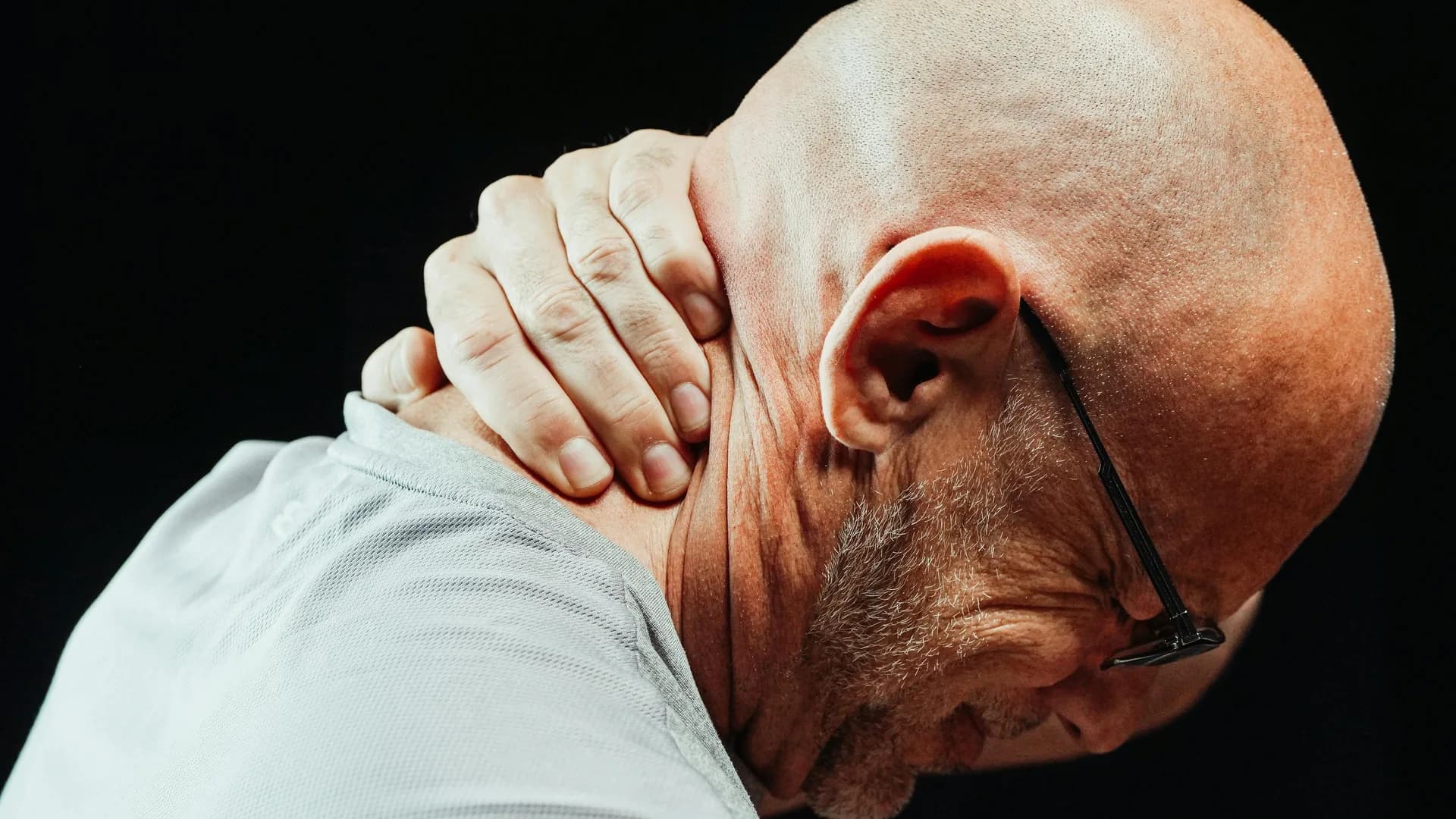
A stiff neck (torticollis) is an acute blockage of the cervical spine characterised by sharp pain and significant limitation of neck movement. It most commonly occurs suddenly, upon waking or following a sudden movement, and results in an antalgic posture with the head tilted and rotated.
Common torticollis is mechanical in origin. It generally results from a reflex muscular spasm, associated with a joint blockage of one or more cervical vertebrae. It is a frequent reason for consulting an osteopath.
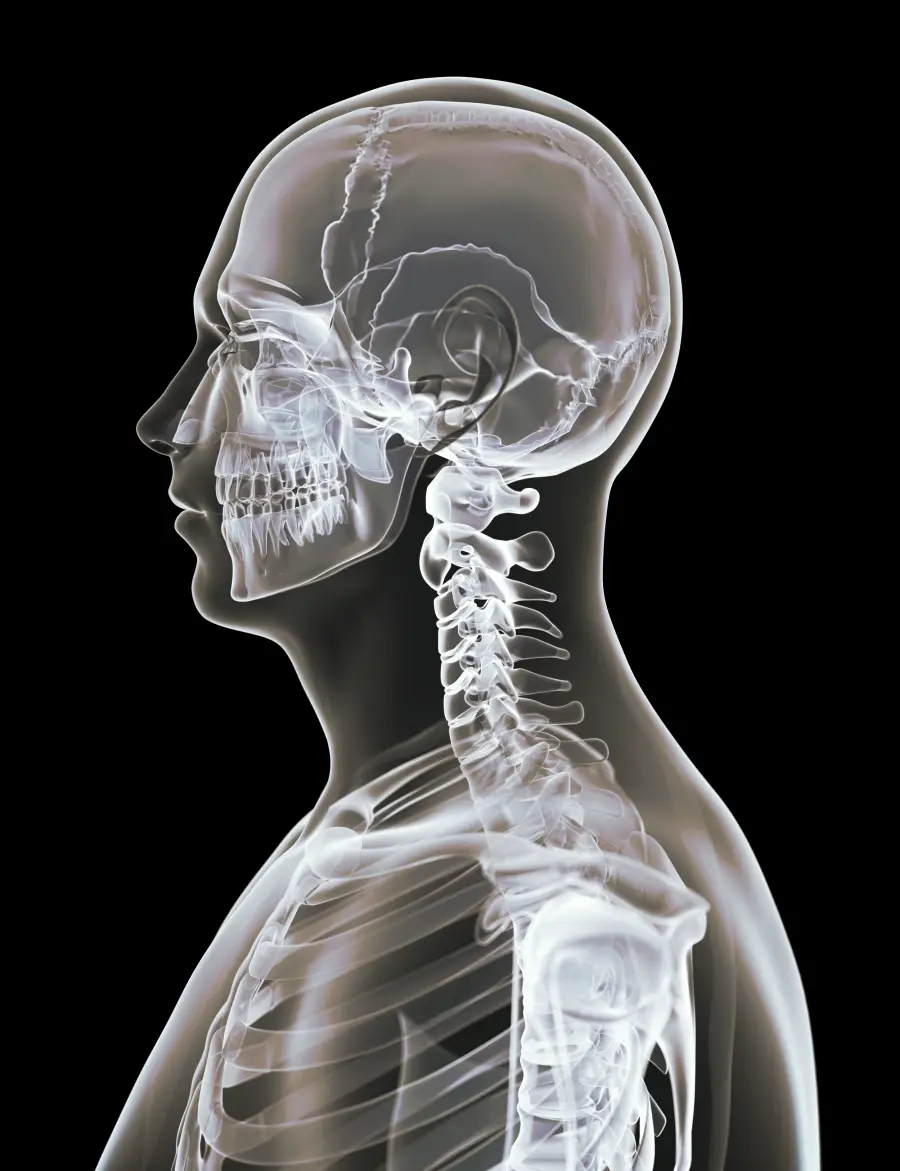
Most stiff necks settle on their own within a few days. That does not make them harmless.
For two or three of those days you cannot reverse a car, sleep on the painful side or check a blind spot on a bicycle, and the muscle guards so hard that it stops the movement before you have decided to make it.
The commonest version arrives on waking. Nothing happened.
You stay dressed.
I begin by asking you to turn your head each way, then to tilt it towards each shoulder, and I watch where the movement stops and what the shoulder does to help it along. Where it stops is the useful information.
Then I use my hands.
I follow the upper trapezius, then the sternocleidomastoid down the front of the neck, then the small sub-occipital muscles under the skull. A neck like this hurts all over, and the point is to find the one band that is genuinely in spasm. Then the joints, level by level.
The examination then leaves the neck.
The junction with the upper back takes part in nearly every stiff neck, and so do the first rib and the shoulder blade, and I ask about your jaw as well, because a night of clenching keeps those muscles busy until dawn.
Osteopathy is particularly well suited for treating common torticollis. Treatment aims to:
Techniques are adapted to the acute phase: priority is given to gentle, functional and muscle energy techniques.
The click is not compulsory.
On a neck still in spasm it is often the wrong tool, and I offer it only when the joint will accept it and when you are comfortable with the idea. I ask you about that beforehand, never mid-technique.
Muscle energy work gets there too. You push gently against my hand for a few seconds, then let go, and the rotation comes back without a sound.
You leave with the pillow sorted out and one movement to repeat every hour while the neck is still guarding. That is the whole list.
1 to 2 sessions are generally sufficient for an acute stiff neck. Significant improvement is often felt after the first consultation. If the torticollis is recurrent, deeper work may be proposed to identify and treat the underlying contributing factors.
Part of that examination exists to rule things out, and it matters more than the treatment. A neck that seized after a fall or a car accident belongs to a different pathway, one that starts with imaging or a medical opinion.
See a doctor rather than an osteopath if the stiff neck comes with a fever, if you have lost strength in a hand, if numbness runs past the elbow, or if the pain wakes you at night and no position calms it.
A fever with a neck that will not bend forwards is a same-day medical matter, and in France the number to ring is 15, or 112 from a mobile.
It happens a few times a year. I refer, and I do not treat.
No referral, no prescription, no French social security number.
A session costs 100 €, settled on the day.
French social security reimburses osteopathy for nobody, resident or visitor, so you leave with an invoice that most private and expatriate policies pay against. Consultations run in English or Portuguese as readily as in French.
The practice is at 9 rue du Regard, five minutes on foot from Saint-Placide, and for a neck that seized this morning it is worth ringing 01 43 20 19 97: slots free up regularly and do not always show on the online diary straight away.
📍 Osteopathy practice
9 Rue du Regard, 75006 Paris
🚇 Metro: Saint-Placide / Rennes / Sèvres-Babylone
A first consultation does not commit you to any treatment plan. We take stock, I examine you, and we decide the next step together.
For a quick slot, calling is the simplest.
Coming from far away? Call before you travel, so we can check together that the trip is worth it.
4.9/5 on Google, 29 reviews · 20 years in practice · GOsC registered (UK)
The information on this page is for informational purposes only.
It does not replace a medical consultation.
Arnaud Marguin — Osteopath D.O.
Graduate of the Geneva School of Osteopathy (2006)
Registered with the General Osteopathic Council (GOsC) — no. 8938
Member of the Registre des Ostéopathes de France (ROF)