Arnaud Marguin — Osteopath D.O.
Graduate of the Geneva School of Osteopathy (2006)
Registered with the General Osteopathic Council (GOsC) — no. 8938
Member of the Registre des Ostéopathes de France (ROF)
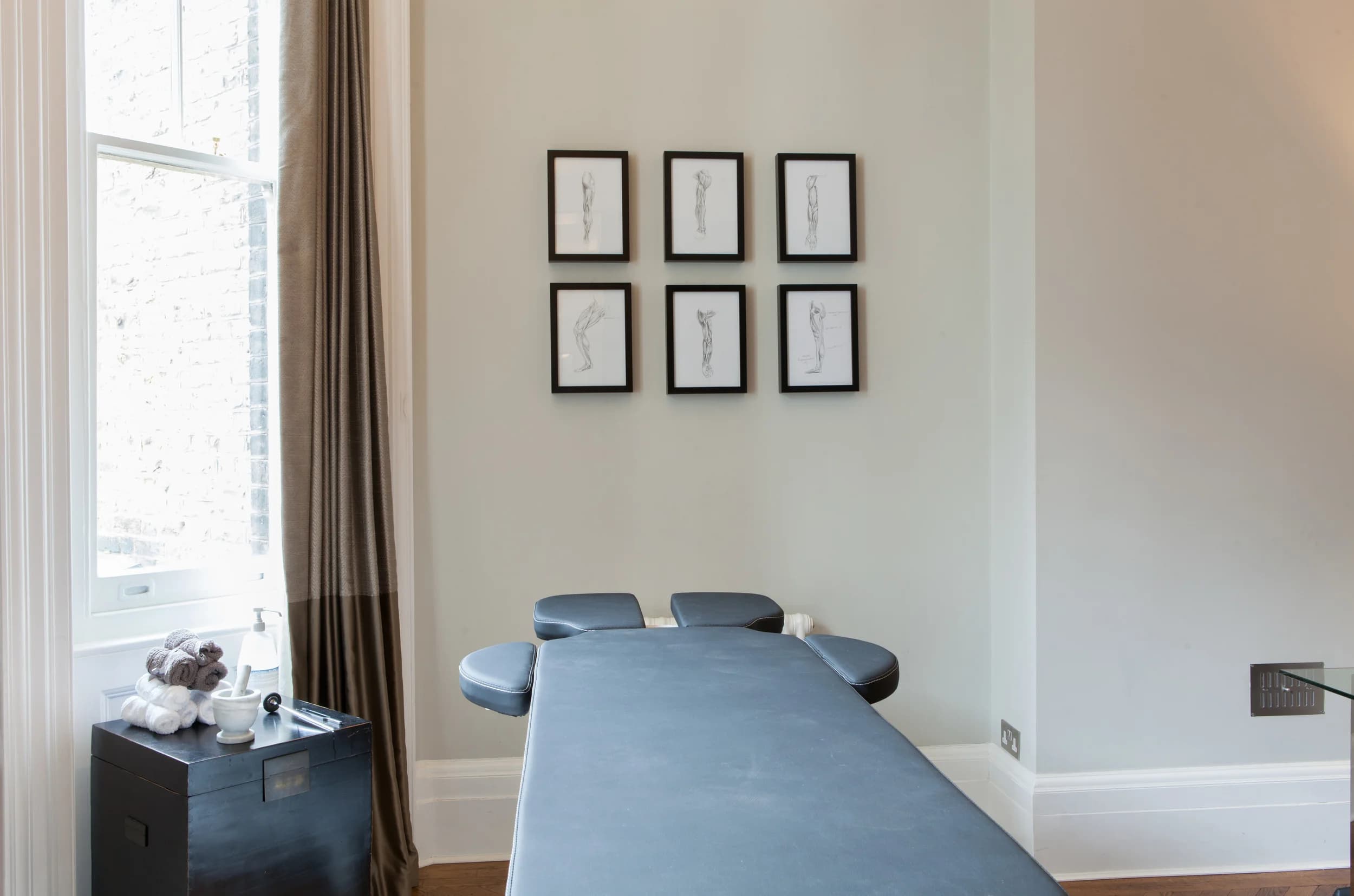
Cranial approach in osteopathy
Cranial osteopathy is a refined branch of osteopathic practice that focuses on the subtle mobility of the cranial bones, the sacrum and the membranes that surround the central nervous system. Using extremely gentle palpation, the practitioner assesses and treats restrictions in the craniosacral system that may contribute to a range of functional complaints. Cranial techniques are applicable to patients of all ages, from newborns to the elderly.
The cranial concept in osteopathy, originally developed by William Garner Sutherland in the early 20th century, is based on the observation that the bones of the skull retain a degree of inherent mobility throughout life. The cranial bones are connected by sutures that allow micro-movements, and these movements are intimately linked to the fluctuation of cerebrospinal fluid and the tension of the intracranial and intraspinal membranes.
Cranial osteopathy uses very light touch — typically no more than 5 grams of pressure — to assess the quality and symmetry of these cranial rhythms and to gently encourage the restoration of balanced mobility where restrictions are found.
Cranial osteopathy may be helpful for a range of conditions:
Cranial techniques are particularly well suited to infants and newborns. The birth process, whether vaginal or by caesarean section, can exert significant forces on the baby's skull and cervical spine. Cranial osteopathy can help to address moulding asymmetries, plagiocephaly (flat head syndrome), sucking difficulties, colic, sleep disturbances and excessive crying.
Treatment of infants is exceptionally gentle. The practitioner uses very light touch to assess and treat the cranial bones, cervical spine and sacrum. Sessions are typically calm and well tolerated, and may be carried out while the baby is feeding or sleeping.
A cranial osteopathy consultation follows the same general structure as any osteopathic appointment. The session begins with a thorough clinical interview, followed by a physical examination that includes both general musculoskeletal assessment and specific cranial palpation.
During the treatment phase, the patient lies comfortably while the practitioner places their hands on the head, sacrum or other relevant areas. The touch is extremely light and the treatment is generally experienced as deeply relaxing. Some patients may feel subtle sensations of warmth, pulsation or release during the session.
A typical session lasts 45 minutes to one hour. The number of sessions required depends on the nature and chronicity of the condition being treated.
Cranial osteopathy is a complementary approach that sits within the broader framework of osteopathic practice. It does not replace conventional medical treatment for serious conditions. The osteopath will always refer to the appropriate medical specialist if clinical findings suggest a pathology requiring further investigation.
Cranial techniques are often used in combination with other osteopathic approaches (structural, functional, visceral) as part of a comprehensive treatment plan tailored to the individual patient.
📍 Osteopathy practice
9 Rue du Regard, 75006 Paris
🚇 Metro: Saint-Placide / Rennes / Sèvres-Babylone
A first consultation does not commit you to any treatment plan. We take stock, I examine you, and we decide the next step together.
For a quick slot, calling is the simplest.
Coming from far away? Call before you travel, so we can check together that the trip is worth it.
4.9/5 on Google, 29 reviews · 20 years in practice · GOsC registered (UK)
The information on this page is for informational purposes only.
It does not replace a medical consultation.
Arnaud Marguin — Osteopath D.O.
Graduate of the Geneva School of Osteopathy (2006)
Registered with the General Osteopathic Council (GOsC) — no. 8938
Member of the Registre des Ostéopathes de France (ROF)