Arnaud Marguin — Osteopath D.O.
Graduate of the Geneva School of Osteopathy (2006)
Registered with the General Osteopathic Council (GOsC) — no. 8938
Member of the Registre des Ostéopathes de France (ROF)
Treatment of cervical disc-related pain
Cervical pain of discogenic origin is a common reason for consultation. When a cervical intervertebral disc deteriorates or protrudes, it can compress a nerve root and cause pain radiating into the arm, shoulder or hand: this is cervicobrachial neuralgia.
Cervical decompression is a variant of neurovertebral spinal decompression specifically adapted to the neck region. It aims to reduce the mechanical stresses exerted on the cervical discs and associated nerve structures.
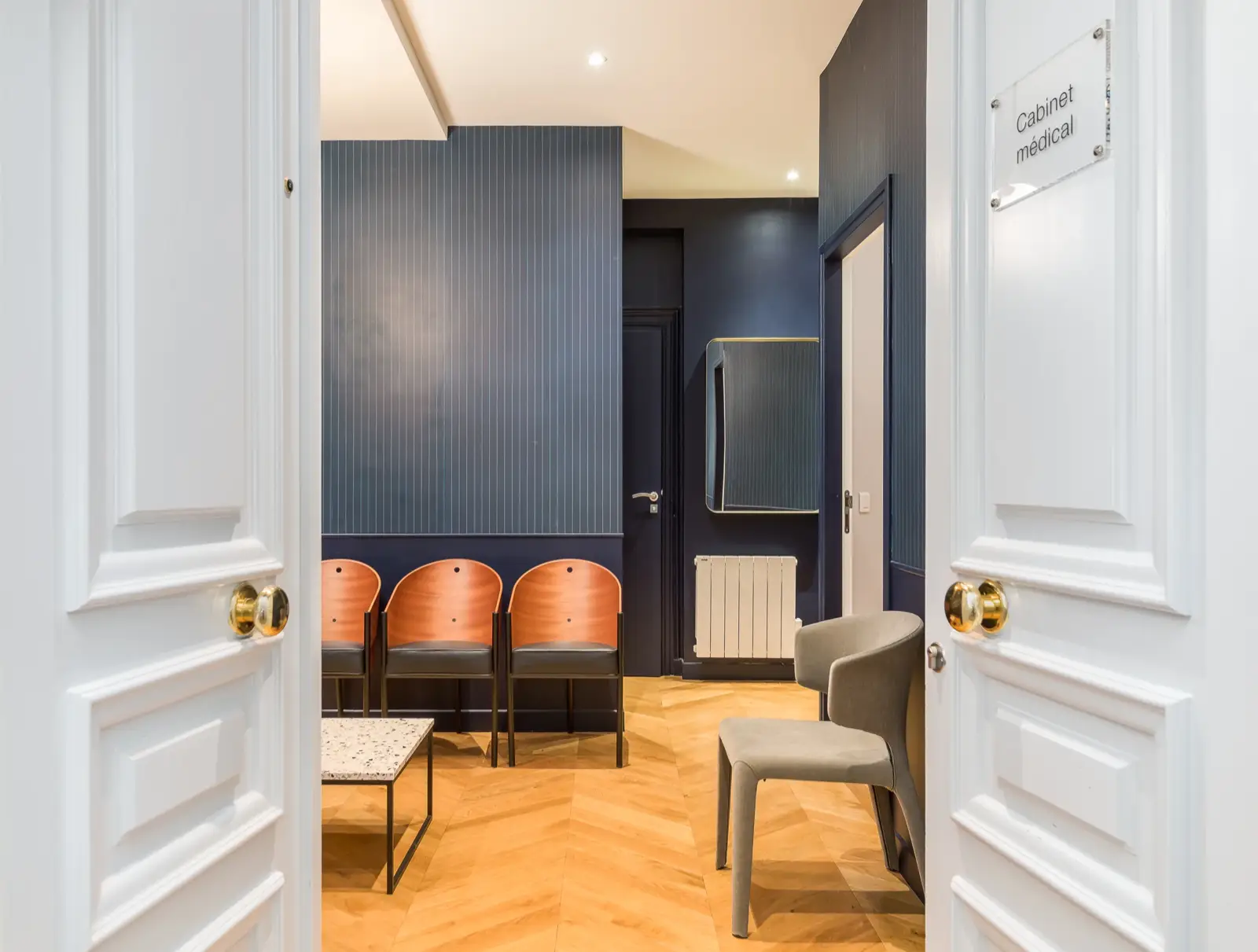
Consultations take place at the practice located at 9 Rue du Regard, 75006 Paris, in the 6th arrondissement.
Cervical decompression may be considered in the following situations:
Cervical decompression differs from lumbar decompression in several ways:
Cervicobrachial neuralgia (CBN) presents as pain that originates in the neck and radiates into the arm, sometimes reaching the fingers. It is often caused by a cervical disc herniation compressing a nerve root.
The path of the pain depends on the level of compression:
Cervical decompression can help relieve this compression by targeting the affected disc level.
In addition to the general contraindications of decompression (fracture, tumour, infection, instability), the cervical spine requires additional precautions:
Title: Exercise only, exercise with mechanical traction, or exercise with over-door traction for patients with cervical radiculopathy, with or without consideration of status on a previously described subgrouping rule: a randomized clinical trial.
Publication: Journal of Orthopaedic & Sports Physical Therapy, 2014; 44(2): 45-57
Results: 86 patients with neck pain and signs of radiculopathy were randomised for four weeks to exercise alone, exercise plus mechanical traction, or exercise plus over-door home traction. At 6 months, disability (Neck Disability Index) was significantly lower with mechanical traction than with exercise alone (−13.3 points) and with home traction (−8.1); the advantage over exercise alone persisted at 12 months. The subgrouping rule under test was supported on the NDI at 6 months only.
Reference: PubMed
Title: Manual therapy, exercise, and traction for patients with cervical radiculopathy.
Results: The combination of cervical traction with manual therapy and exercises showed significant improvement in pain and function in patients with cervical radiculopathy, compared with exercises alone.
Reference: PubMed
📍 Osteopathy practice
9 Rue du Regard, 75006 Paris
🚇 Metro: Saint-Placide / Rennes / Sèvres-Babylone
A first consultation does not commit you to any treatment plan. We take stock, I examine you, and we decide the next step together.
For a quick slot, calling is the simplest.
Coming from far away? Call before you travel, so we can check together that the trip is worth it.
4.9/5 on Google, 29 reviews · 20 years in practice · GOsC registered (UK)
The information on this page is for informational purposes only.
It does not replace a medical consultation.
Arnaud Marguin — Osteopath D.O.
Graduate of the Geneva School of Osteopathy (2006)
Registered with the General Osteopathic Council (GOsC) — no. 8938
Member of the Registre des Ostéopathes de France (ROF)