Arnaud Marguin — Osteopath D.O.
Graduate of the Geneva School of Osteopathy (2006)
Registered with the General Osteopathic Council (GOsC) — no. 8938
Member of the Registre des Ostéopathes de France (ROF)
Spinal decompression therapy
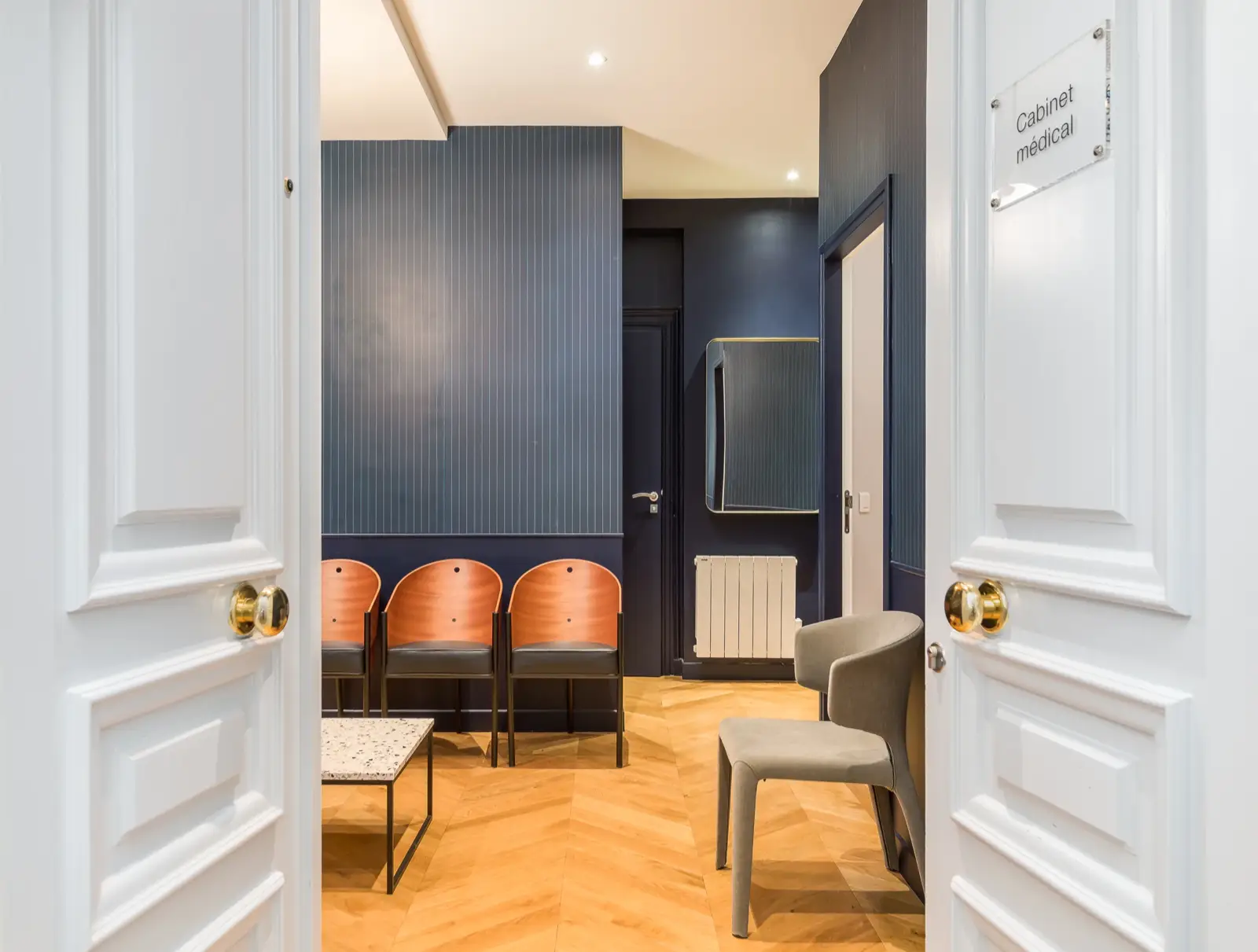
Neurovertebral spinal decompression is a mechanically assisted traction technique designed to relieve pressure on the intervertebral discs and compressed nerve roots. It is a non-surgical, non-invasive approach used in the management of disc herniations, bulging discs, sciatica, chronic lower back pain and certain cervical conditions. The practice at 9 Rue du Regard in Paris 6 has been equipped with a spinal decompression table since 2009.
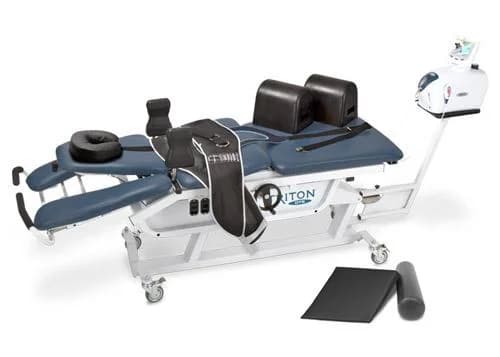
Spinal decompression therapy may be indicated for the following conditions:
The patient lies on a motorised decompression table. A harness is fitted around the pelvis (for lumbar treatment) or the head (for cervical treatment). The table then applies a precisely controlled traction force, gently separating the vertebrae and creating negative intradiscal pressure.
This negative pressure has several effects:
Each session lasts approximately 20 to 30 minutes. The traction force is applied in cycles of pull and release, allowing the surrounding muscles to relax and maximising the decompressive effect.
A typical course of spinal decompression therapy consists of 10 to 20 sessions, depending on the severity and chronicity of the condition. Sessions are usually scheduled 2 to 3 times per week during the initial phase, then gradually reduced in frequency as symptoms improve.
Spinal decompression is often combined with osteopathic manual treatment to address associated muscular tension, joint restrictions and postural imbalances. This integrated approach maximises the therapeutic outcome.
Spinal decompression is not suitable for all patients. The following contraindications apply:
A thorough clinical assessment is performed before any decompression session to ensure the treatment is appropriate and safe for the individual patient.
Several clinical studies have investigated the effectiveness of spinal decompression therapy:
While further large-scale randomised controlled trials are needed, the existing evidence supports the use of spinal decompression as a safe and effective component of a comprehensive treatment plan for disc-related conditions.
📍 Osteopathy practice
9 Rue du Regard, 75006 Paris
🚇 Metro: Saint-Placide / Rennes / Sèvres-Babylone
A first consultation does not commit you to any treatment plan. We take stock, I examine you, and we decide the next step together.
For a quick slot, calling is the simplest.
Coming from far away? Call before you travel, so we can check together that the trip is worth it.
4.9/5 on Google, 29 reviews · 20 years in practice · GOsC registered (UK)
The information on this page is for informational purposes only.
It does not replace a medical consultation.
Arnaud Marguin — Osteopath D.O.
Graduate of the Geneva School of Osteopathy (2006)
Registered with the General Osteopathic Council (GOsC) — no. 8938
Member of the Registre des Ostéopathes de France (ROF)