Arnaud Marguin — Osteopath D.O.
Graduate of the Geneva School of Osteopathy (2006)
Registered with the General Osteopathic Council (GOsC) — no. 8938
Member of the Registre des Ostéopathes de France (ROF)
Non-surgical treatment of herniated disc
A herniated disc is one of the most common causes of lower back pain and radicular pain. When an intervertebral disc tears, the nucleus pulposus can protrude and compress a nerve root, causing pain, numbness or weakness in the lower limb.
Neurovertebral spinal decompression is a non-surgical approach that may be considered in the management of certain herniated discs, following appropriate clinical assessment and imaging.
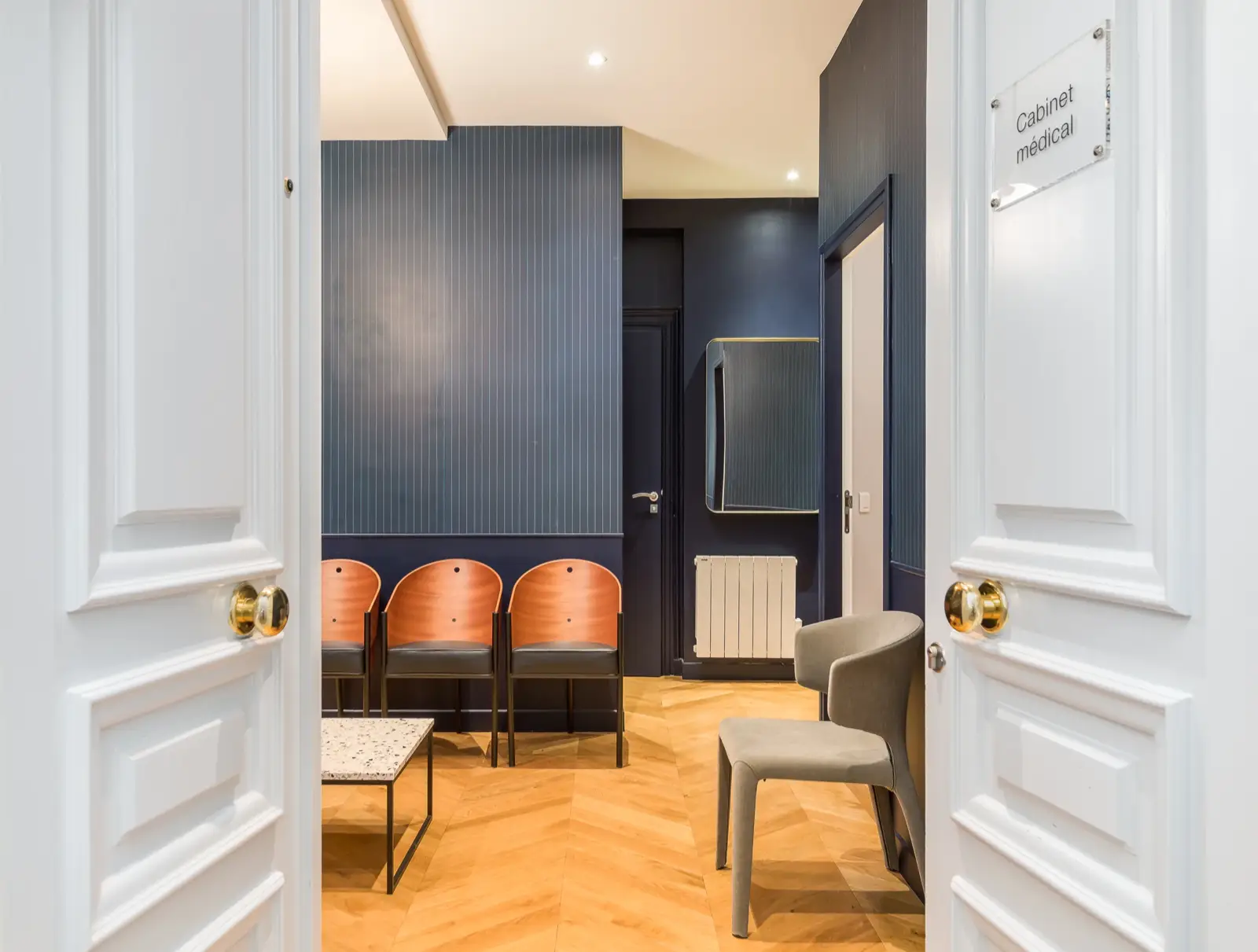
Consultations take place at the practice located at 9 Rue du Regard, 75006 Paris, in the 6th arrondissement.
Decompression relies on controlled vertebral traction, performed using a specialised device. The principle is to create negative intradiscal pressure at the level of the affected spinal segment.
This negative pressure aims to:
The traction force is applied progressively and cyclically, with alternating phases of traction and release that help prevent reflex muscle contraction.
The management of a herniated disc through neurovertebral spinal decompression follows a structured protocol:
Neurovertebral spinal decompression is a conservative option that can be offered before considering surgical intervention. However, certain situations require a priority surgical opinion:
Outside of these emergency situations, the scientific literature suggests that a well-conducted conservative treatment can produce results comparable to surgery at medium term for many herniated discs.
The outcomes of decompression vary between patients and depend on several factors: size and location of the herniation, duration of symptoms, general condition of the patient and adherence to the protocol.
Some patients report improvement from the very first sessions, while others require a longer protocol. Improvement generally affects radicular pain first, followed by lumbar pain and functional mobility.
Title: Effect of non-surgical spinal decompression on pain and herniated disc volume in patients with subacute lumbar disc herniation.
Method: Randomised clinical trial on 60 patients with a decompression group and a control group over 8 weeks.
Results:
Reference: PubMed
Title: Restoration of disk height through non-surgical spinal decompression is associated with decreased discogenic low back pain: a retrospective cohort study.
Method: Retrospective analysis of patients treated with non-surgical decompression, evaluating the correlation between disc height restoration and pain reduction.
Results:
Reference: PubMed
📍 Osteopathy practice
9 Rue du Regard, 75006 Paris
🚇 Metro: Saint-Placide / Rennes / Sèvres-Babylone
A first consultation does not commit you to any treatment plan. We take stock, I examine you, and we decide the next step together.
For a quick slot, calling is the simplest.
Coming from far away? Call before you travel, so we can check together that the trip is worth it.
4.9/5 on Google, 29 reviews · 20 years in practice · GOsC registered (UK)
The information on this page is for informational purposes only.
It does not replace a medical consultation.
Arnaud Marguin — Osteopath D.O.
Graduate of the Geneva School of Osteopathy (2006)
Registered with the General Osteopathic Council (GOsC) — no. 8938
Member of the Registre des Ostéopathes de France (ROF)