Arnaud Marguin — Osteopath D.O.
Graduate of the Geneva School of Osteopathy (2006)
Registered with the General Osteopathic Council (GOsC) — no. 8938
Member of the Registre des Ostéopathes de France (ROF)
Treatment of Achilles tendinopathy with shock wave therapy
Achilles tendinopathy is a degenerative condition of the calcaneal tendon, the largest and most heavily loaded tendon in the human body. It presents as progressive pain at the back of the ankle, aggravated by physical activity and relieved by rest. It is a common condition among runners but also affects non-athletic patients.
Two main forms are distinguished:
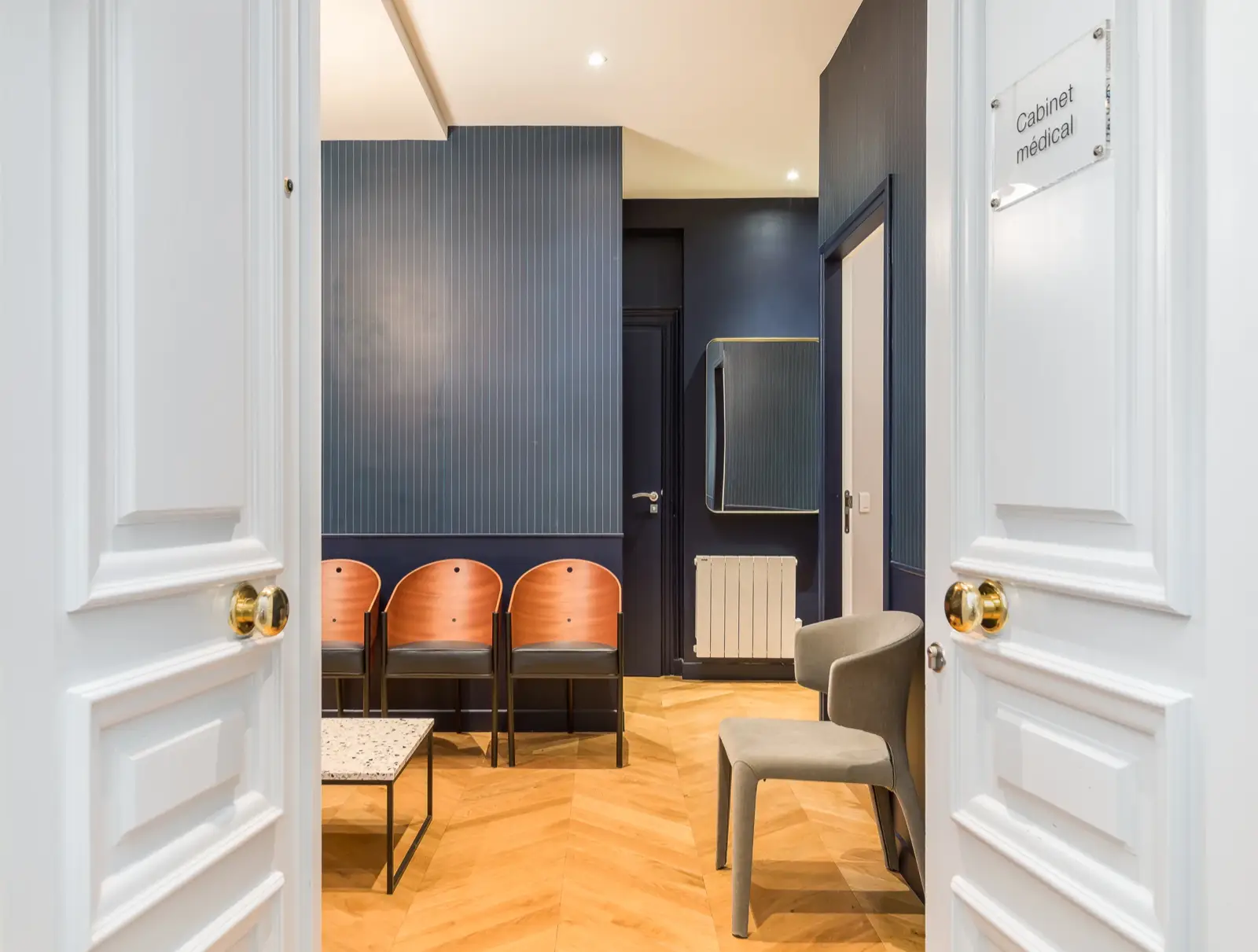
Consultations take place at the clinic located at 9 Rue du Regard, 75006 Paris, in the 6th arrondissement.
The Achilles tendon is subjected to considerable mechanical loads: up to 6 to 8 times body weight during running. When the applied load repeatedly exceeds the tendon's capacity to adapt, a degenerative process develops. Histological studies show disorganisation of collagen fibres, pathological neovascularisation and an increase in ground substance (tendinosis).
This degenerative process differs from classical inflammation, which explains why anti-inflammatory medications have limited efficacy and why the condition tends to persist if the mechanical load is not appropriately managed.
Radial shock waves act on the degenerative tendon through several complementary pathways:
The protocol generally consists of 3 to 5 sessions, spaced 7 to 10 days apart. Each session lasts approximately 5 to 10 minutes. The painful area is located by palpation and the intensity is gradually adjusted according to the patient's tolerance.
Shock wave therapy is indicated when the tendinopathy has persisted for more than 3 months despite relative rest, training load adaptation and rehabilitation exercises. It may be combined with an eccentric exercise programme.
The Alfredson protocol (eccentric exercises for the triceps surae) is one of the best-documented approaches for mid-portion Achilles tendinopathy. It consists of controlled lowering exercises performed on the edge of a step, carried out daily for 12 weeks.
Combining shock wave therapy with eccentric exercises may provide a greater benefit than either treatment alone. Shock waves stimulate tissue repair at the cellular level, while eccentric exercises optimise the organisation of collagen fibres in response to mechanical loading.
Achilles tendinopathy often occurs within a broader biomechanical context. The osteopathic assessment helps identify contributing factors:
The combined approach (shock wave therapy, eccentric exercises, osteopathic treatment and load management) provides the most comprehensive management of chronic Achilles tendinopathy.
Several studies and meta-analyses have shown that radial shock wave therapy is effective in the treatment of chronic Achilles tendinopathy, particularly the mid-portion form. Results are generally assessed at 3 to 6 months and show significant improvement in pain and function.
Running is generally not recommended during the treatment course, especially if it causes pain. A gradual return to running is planned based on clinical progress. Lower-impact activities (cycling, swimming) may be maintained if well tolerated.
The standard protocol consists of 3 to 5 sessions, spaced 7 to 10 days apart. The biological effects continue for several weeks after the final session, and maximum improvement may be observed 3 to 6 months later.
📍 Osteopathy practice
9 Rue du Regard, 75006 Paris
🚇 Metro: Saint-Placide / Rennes / Sèvres-Babylone
A first consultation does not commit you to any treatment plan. We take stock, I examine you, and we decide the next step together.
For a quick slot, calling is the simplest.
Coming from far away? Call before you travel, so we can check together that the trip is worth it.
4.9/5 on Google, 29 reviews · 20 years in practice · GOsC registered (UK)
The information on this page is for informational purposes only.
It does not replace a medical consultation.
Arnaud Marguin — Osteopath D.O.
Graduate of the Geneva School of Osteopathy (2006)
Registered with the General Osteopathic Council (GOsC) — no. 8938
Member of the Registre des Ostéopathes de France (ROF)