Arnaud Marguin — Osteopath D.O.
Graduate of the Geneva School of Osteopathy (2006)
Registered with the General Osteopathic Council (GOsC) — no. 8938
Member of the Registre des Ostéopathes de France (ROF)
Treatment of calcific shoulder tendinitis with shock wave therapy
Calcific tendinitis of the rotator cuff is a common condition characterised by the deposit of calcium crystals (hydroxyapatite) within one or more tendons of the rotator cuff. The supraspinatus tendon is most frequently affected. This calcification can cause significant pain, limited shoulder movement and highly disabling acute episodes.
The condition classically progresses through three phases: a formative phase (often silent), a resting phase (stable calcification, variable pain) and a resorptive phase (which may be accompanied by an acute inflammatory flare).
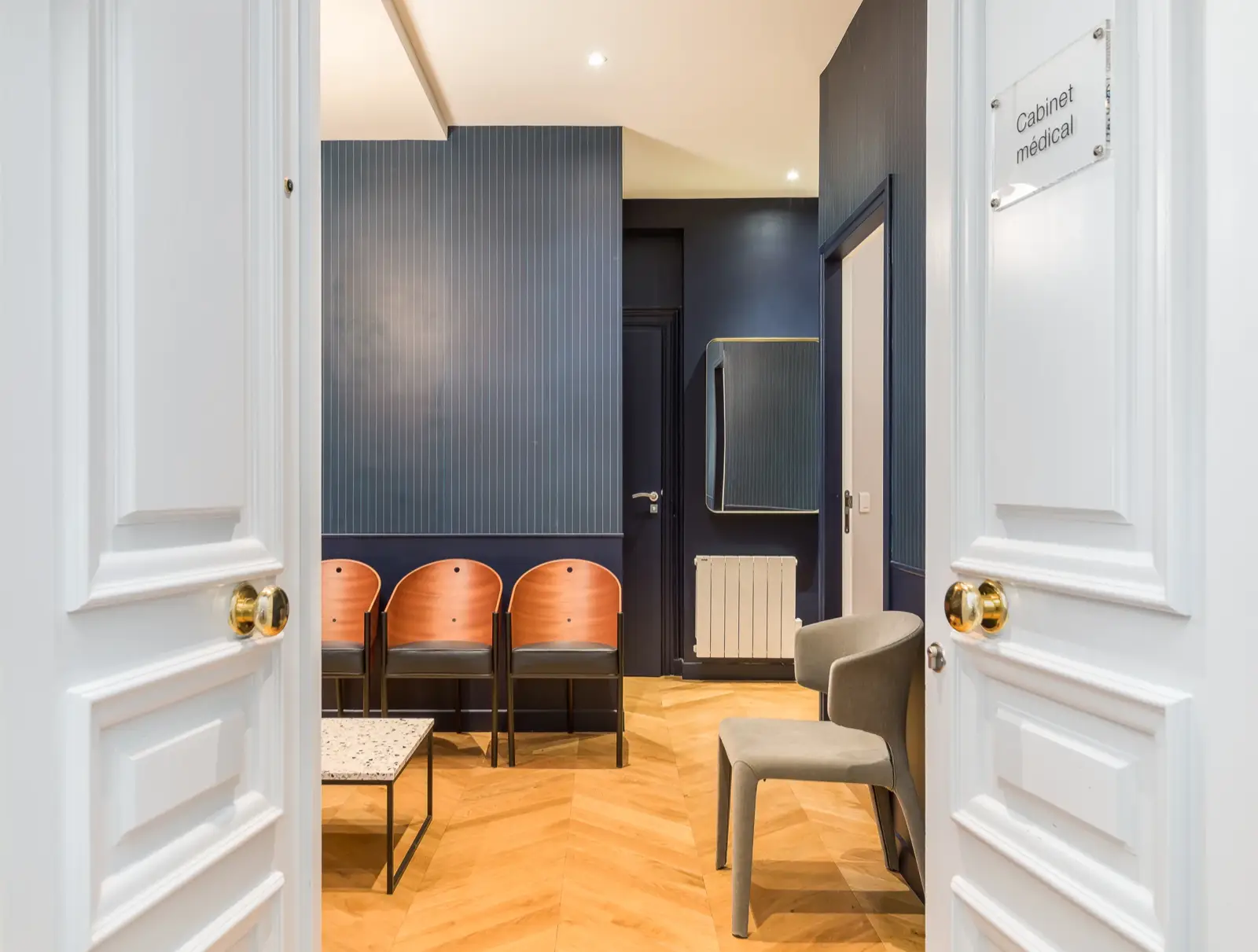
Consultations take place at the clinic located at 9 Rue du Regard, 75006 Paris, in the 6th arrondissement.
Shock wave therapy is one of the best-documented non-surgical treatments for calcific tendinitis of the shoulder. It represents an alternative to invasive techniques (ultrasound-guided needle aspiration, arthroscopic surgery) and is recommended after failure of first-line conservative treatment.
Unlike tendinopathies without calcification, where the efficacy of shock waves remains debated, the scientific literature shows particularly favourable results for calcific tendinitis.
Shock waves act on tendon calcification through several mechanisms:
The protocol generally consists of 3 to 5 sessions, spaced 7 to 10 days apart. Each session lasts approximately 10 minutes. The calcification zone is located by palpation and, where possible, correlated with prior imaging (X-ray or ultrasound).
Treatment efficacy depends on several factors: the size and stage of the calcification, the duration of symptoms and the patient's compliance with the associated rehabilitation programme. Results are generally assessed 3 to 6 months after the end of treatment.
The management of calcific tendinitis follows a stepwise approach:
Shock wave therapy occupies an intermediate position, after failure of first-line treatments and before more invasive interventions.
The osteopathic approach complements shock wave treatment by addressing associated biomechanical factors:
Shock wave therapy can promote the fragmentation and progressive resorption of calcium deposits. Studies report complete or partial disappearance of the calcification in 60 to 80% of cases, depending on the size and stage of the deposit.
The sensation varies according to individual sensitivity and the location of the calcification. The intensity is gradually adjusted during the session. Most patients describe moderate discomfort that remains bearable. Some local tenderness may persist for a few hours after the session.
The protocol generally consists of 3 to 5 sessions, spaced 7 to 10 days apart. The full benefit may take several weeks to develop after the final session. Follow-up imaging may be performed at a later stage to assess calcification resorption.
📍 Osteopathy practice
9 Rue du Regard, 75006 Paris
🚇 Metro: Saint-Placide / Rennes / Sèvres-Babylone
A first consultation does not commit you to any treatment plan. We take stock, I examine you, and we decide the next step together.
For a quick slot, calling is the simplest.
Coming from far away? Call before you travel, so we can check together that the trip is worth it.
4.9/5 on Google, 29 reviews · 20 years in practice · GOsC registered (UK)
The information on this page is for informational purposes only.
It does not replace a medical consultation.
Arnaud Marguin — Osteopath D.O.
Graduate of the Geneva School of Osteopathy (2006)
Registered with the General Osteopathic Council (GOsC) — no. 8938
Member of the Registre des Ostéopathes de France (ROF)